Every Tape Wrap Coating Has Its Place
John Thomson (Director – SeaShield™) and Chiara Sorrentino MRSC (Technical Director) consider why every tape wrap coating has its place in the October 2026 edition of World Pipelines Magazine.
Introduction
Pipelines are essential for the safe and reliable transport of resources, such as oil, gas, and water, and depend on effective corrosion protection to maintain their integrity throughout service.
Selecting the right coating to protect a pipeline from corrosion depends on a clear understanding of the conditions it will need to withstand. Temperature, ground conditions, application practicalities, and pipeline design all need to be considered if the coating is to perform correctly. If any of these factors are omitted or incorrectly assessed, the result can be difficulty during application or, in more serious cases, systemic failure of the coating. For this reason, protecting pipelines from corrosion remains a complex challenge where many variables determine the correct choice of coating. Coating specifiers therefore play a vital role in translating project requirements, standards, and service conditions into an appropriate coating selection.
An Overview of Tape Wrap Coating Technologies
Compared with pipe material selection, coating selection can be much less straightforward. Pipe types are relatively limited and supported by extensive regulations, standards, and best-practice guidance. By contrast, coating technologies are more numerous and often less prescriptively defined, meaning specifiers must rely on technical judgement as well as compliance when assessing surface preparation, application conditions, service environment, and long-term performance.
Tape wrap coatings have been used to protect pipelines for many decades, with new technologies developed through continuous development in response to different challenges. For example, petrolatum tape used to be made using a woven, natural fibre cloth, but this would create pinholes and breakdown over time reducing the effectiveness of the tape. Now the use of synthetic stitch-bonded cloth overcomes these problems.
Tape wrap coatings offer several advantages over alternative types of coating. For example, thickness is considered a key metric during coating application. When applying a liquid coating, the thickness of the coating must be monitored and controlled; however, a tape wrap coating is supplied to the user with a factory-controlled thickness which is easily maintained during application. Of course, there are considerations specific to tape wrap coatings, such as the tension applied to the components, however, they are relatively user-friendly compared to other coatings which require more experience and skill to apply.
• Petrolatum tapes isolate a pipe surface from moisture, oxygen, and electrical currents which makes them an effective corrosion prevention coating. Petrolatum tape technology uses a non-reactive, moisture-repellent compound incorporated into a flexible carrier fabric to form an impermeable barrier against water and oxygen. This barrier displaces existing moisture and helps protect pipes, flanges, and valves without the need for complex surface preparation. Petrolatum tapes also remain flexible and waterproof over time, rather than cracking or hardening in service.
• In bitumen tape wrap coatings, the primer is central to the adhesion process because it forms the interface between the steel substrate and the bituminous adhesive. By conditioning the surface, improving wetting, and creating a more uniform contact layer, the primer helps the bitumen compound bond effectively to the steel. This intimate contact supports anchor adhesion, reduces the risk of coating holidays and under film corrosion, and contributes to the long-term integrity of the corrosion prevention coating. The tape itself combines this primed interface with a flexible polymer-based backing and a bituminous adhesive layer to protect buried pipelines. During application, the backing is put under tension from which it then attempts to recover, generating a continuous inward pressure against the pipe surface. This pressure helps mould the bituminous compound into surface irregularities and overlap areas, improving overlap sealing and maintaining close substrate contact, further reducing pathways for water ingress.
• In butyl tape wrap coatings, a pressure-sensitive butyl rubber adhesive bonds to a suitably prepared and primed steel substrate through wetting and molecular attraction. The primer acts as an activation layer, helping the adhesive flow across the surface and maximise contact with the substrate. This close contact is important because the flexible, elastic nature of the butyl compound allows it to conform to irregular surface profiles and accommodate stresses from thermal expansion, vibration, and soil movement. Combined with a low-permeability polyethylene backing, the adhesive layer provides a sealed barrier that limits the ingress of water and oxygen, reducing the risk of corrosion beneath the coating. The performance of the coating therefore depends strongly on achieving adequate adhesion to a properly prepared and suitably primed surface.
• Viscoelastic coatings have been engineered to address specific challenges in pipeline corrosion protection. They combine the flow characteristics of a viscous liquid with the recovery behaviour of an elastic solid, enabling the material to wet the pipe surface fully, flow into surface irregularities and maintain intimate contact with the substrate over time, without chemical curing. This helps maintain close contact with the substrate while preserving the flexibility and ease of application associated with tape-based coatings. The result is a continuous corrosion protection layer that limits the pathways for water and oxygen ingress, while also accommodating movement, minor surface imperfections and changes in service conditions. When used with suitable outer wraps for compression and mechanical protection, viscoelastic coatings can provide a highly conformable and durable solution that retains the familiar handling and application advantages of tape wrap coatings.
The timeline of tape wrap coating technologies should not be viewed as a simple progression from new to obsolete. Each generation has expanded the specifier’s options, with petrolatum, bitumen, butyl and viscoelastic coatings all remaining relevant today where their properties suit the application. Although innovative technologies are often valued for their novelty, pipeline coatings are expected to perform over the long term; for this reason, proven service history remains an important indicator of a coating’s reliability and effectiveness, a quality that a genuinely novel coating cannot yet demonstrate.
Matching Solutions to Challenges
With an abundance of choice in tape wrap coating technologies, what considerations are important for selecting the correct tape wrap coating?
• Surface preparation requirements: these vary significantly between technologies, from those designed to tolerate minimal preparation or damp substrates to ones requiring cleaner, drier surfaces to achieve effective adhesion and long-term corrosion prevention.
• Application practicalities: what temperature will the pipeline be at when the coating is applied, what environmental contamination such as dust or moisture will be present and what access will the applicators have to the pipeline.
• Service conditions: what must the coating resist, including, the temperatures the pipeline will see in service; compatibility with any coating that may be on the pipeline; and the ground conditions the pipe will be operating in, such as sabkha soil or poorly graded backfill.
• The budget available to purchase the coating.
• The potential for maintenance of the coating.
The tape wrap coating can be selected based on a preference for a particular technology, selecting the specific tape wrap coating based on the parameters of the project. Alternatively, the project parameters can be used to guide the tape wrap coating technology and specific tape wrap coating within that technology.
Case Studies
As a coating manufacturer with a long history for the supply of proven tape wrap coatings, we are able to provide real-world case studies demonstrating how these considerations have shaped the selection of these tape wrap coatings:
Case Study 1: Pipeline rehabilitation in marshland (Fig 1).
This pipeline rehabilitation required the removal of an existing coal tar epoxy coating and its subsequent replacement with a suitable tape wrap coating. Sections of the pipeline ran through areas prone to flooding where the pipeline trench could not be reliably drained to ensure the pipeline would be dry. This would restrict the surface preparation that was possible to achieve and would require that the tape wrap coating be suitable for application to a wet surface.
Petrolatum tapes provided an ideal solution to these conditions. They can be applied to a wet surface with minimal preparation. Combined with a suitable outer wrap, to provide additional mechanical protection, the tape wrap coating met the requirements of the International Standard ISO 21809-3 and would perform well in the ground conditions seen during service. It was, however, the application conditions that really dictated the selection of coating in this case.
Case Study 2: New ductile iron water pipeline construction in desert (Fig 2).
This project was a large water transmission project, where a cold applied bitumen tape wrap coating was selected for a ductile iron pipeline. Ductile iron does not readily accept abrasive blasting, which can make it less suitable for liquid-applied coatings that depend on higher levels of surface preparation. Further to this, the surface of ductile iron pipe is “mottled”, an uneven surface which is not suitable for all coating types. The pipeline was also installed in a low-lying environment and highly corrosive soil conditions. These factors made a bitumen tape wrap coating the practical choice for long-term external corrosion protection.
The pipe surface was prepared and primed before application of the cold-applied bitumen tape wrapping coating, with mechanised wrapping equipment used to help achieve efficient and consistent application across the large-diameter pipe sections. In this case, the combination of material, ground conditions and application practicality shaped the coating selection.
Case Study 3: Offshore pipeline construction where speed of construction was key (Fig 3).
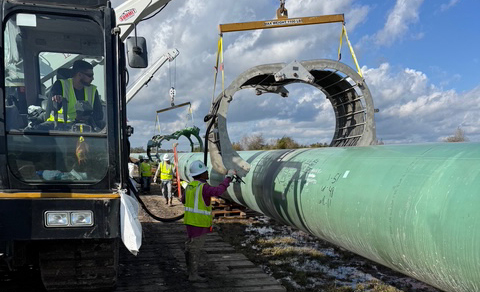
This project was an offshore pipe lay project for a pipeline that would see operating temperatures over 100°C, a relatively high operating temperature for any tape wrap coating. The tape wrap coating also needed to be able to withstand the harsh production conditions on the lay barge, including passing through tensioners and off the stinger without suffering meaningful damage. The application also had to be completed very quickly, to keep it off the critical path of the pipe lay production process. A viscoelastic coating comprised of a viscoelastic inner layer, a polymeric outer wrap for compression, a moisture cured fiberglass outer wrap and a polymeric mesh secured with metallic bands was selected to meet these requirements.
The whole coating could be applied within the required 5-minute time limit, with the tough outer layers of the moisture cured outer wrap and polymeric mesh providing protection to the coating in the lay barge and in service. The coating met the requirements of ISO 21809-3 even at the relatively high service temperature; it was therefore the combination of application and service requirements that shaped the selection of the coating on this project.
Future Trends and Innovations
Tape wrap coatings have had a place in the protection of pipelines for a long time, and they will certainly continue to have a place in the future. Change drivers in this sector include improving health and safety and reducing environmental impacts both of which are objectives that tape wrap coatings are aligned with. Tape wrap coatings are increasingly becoming more surface tolerant, being suitable for application to St2 and St3 levels of surface preparation. This, in turn, reduces the requirement for abrasive blasting, removes safety risks on site, prevents contamination from abrasive blasting in the environment and eliminates the requirement for heavy machinery on site. Further to this, manufacturers of tape wrap coatings are increasingly working to reduce the requirements for primers or similar VOC-containing components. Altogether, this further reduces health and safety risks on site and brings about additional environmental benefits.
Recent discussions within the coating industry have turned to the requirements of coatings that will be used on hydrogen and carbon capture and storage (CCS) pipelines. There is concern that these mediums will introduce new degradation mechanisms that traditional oil and gas coating specifications were not designed to manage.
Hydrogen molecules are extremely small and can diffuse through many polymers more readily than natural gas or other hydrocarbons. Hydrogen can also diffuse into steel, reducing ductility and therefore increasing susceptibility to cracking. Hydrogen accumulation at the coating-to-steel interface could potentially affect coating adhesion, increase susceptibility to cathodic disbondment and reduce long-term adhesion retention properties. While these mechanisms primarily concern internal coatings, questions remain regarding whether hydrogen permeation could also influence external coating performance. Field joints are a known weak point in the pipeline coating and therefore these questions may be particularly relevant to field joint coatings where tape wrap coatings are often utilised. Further investigation on this subject is certainly justified given the potentially high consequence of hydrogen pipeline rupture.
Water contamination within a CO2 pipeline can rapidly form carbonic acid, which will greatly increase corrosion rates. Similarly, CO2 can be contaminated with other impurities which can affect corrosion rates; however, this contamination is generally of concern for internal coatings rather than external coatings. More relevant to external tape wrap coatings are sudden temperature changes caused by rapid decompression or the Joule-Thomson effect. The Joule-Thomson effect is a consideration for CO2 pipelines because CO2 is a real gas, where the molecules in the gas experience attractive forces that must be overcome during expansion, for example when the gas passes through a valve. Conversely, natural gas behaves more like an ideal gas, which is not subject to the same forces. As pipelines used for CCS may be repurposed oil and gas pipelines, the temperature requirements for CCS may be far wider than when the pipeline was used for oil and gas. Through these temperature changes, coatings must retain flexibility, adhesion, ductility, and toughness to prevent premature breakdown and failure. So, while generally, the requirements for CCS pipelines will not be vastly different to the requirements for oil and gas pipelines; further consideration is warranted, and additional testing requirements should be developed, validated and standardised.
A Technology-Neutral Approach: Maximising Choice
A technology-neutral approach does not mean treating all coatings as interchangeable. Rather, it means recognising that each coating has particular strengths and limitations, and that the most appropriate choice should be driven by the requirements of the asset.
Offering a broad range of technologies allows the selection process to remain focused on the project need. Petrolatum, bitumen, butyl, and viscoelastic tapes all remain relevant where their properties align with the service and application conditions. In this context, the selection process should not be driven simply by the latest or most technically advanced option, but by a clear assessment of the project requirements and the coating that provides the best balance of corrosion protection, practicality, durability, compliance, and cost.
Of course, a tape wrap coating may not always be the optimal solution. There are many coating types available, and they almost all have situations where they excel.
Standards such as ISO 21809-3 help provide guidance on the coating types available and the conditions in which they are suitable for use. Similarly, there are many technology neutral experts and resources available to provide further guidance on suitable coating selection for specific projects.
A technology-neutral approach helps ensure that specification decisions are based on the actual risks and constraints of the project, supported by relevant experience, testing, and evidence. This approach can help demonstrate that appropriate skill, care and judgement have been applied in accordance with the relevant standards. This gives asset owners, contractors, and specifiers greater confidence that the selected coating is fit for use and suitable for the conditions in which it will be applied and expected to perform.
In practice, maximising choice is not about offering every possible product; it is about ensuring that the right options remain available. When coating selection is approached objectively, each technology can be used where it adds the most value, and the final recommendation is more likely to deliver reliable, long-term corrosion protection.
Conclusion
Pipeline corrosion protection has never been a one-size-fits-all challenge, and tape wrap coatings reflect this reality. Petrolatum, bitumen, butyl, and viscoelastic technologies have each been developed in response to different application conditions, service environments, and performance requirements. Their continued use demonstrates that no single coating is universally best; each has a place where its properties align with the needs of the asset.
Effective coating selection therefore depends on understanding the specific risks and constraints of the project. Surface preparation, site conditions, operating temperature, mechanical protection, compatibility with existing coatings, maintenance expectations and cost all influence which coating will provide the most reliable long-term protection. The examples discussed show that the most suitable solution is often shaped as much by practical installation requirements as by service performance.
A technology-neutral approach helps keep the focus on these requirements rather than on any one product type. By considering the full range of available tape technologies objectively, specifiers and asset owners can select coatings that are appropriate, practical, and durable for the conditions in which they will be applied.
In pipeline corrosion protection, every tape wrap coating has its place; the key is ensuring that it is used in the right place.
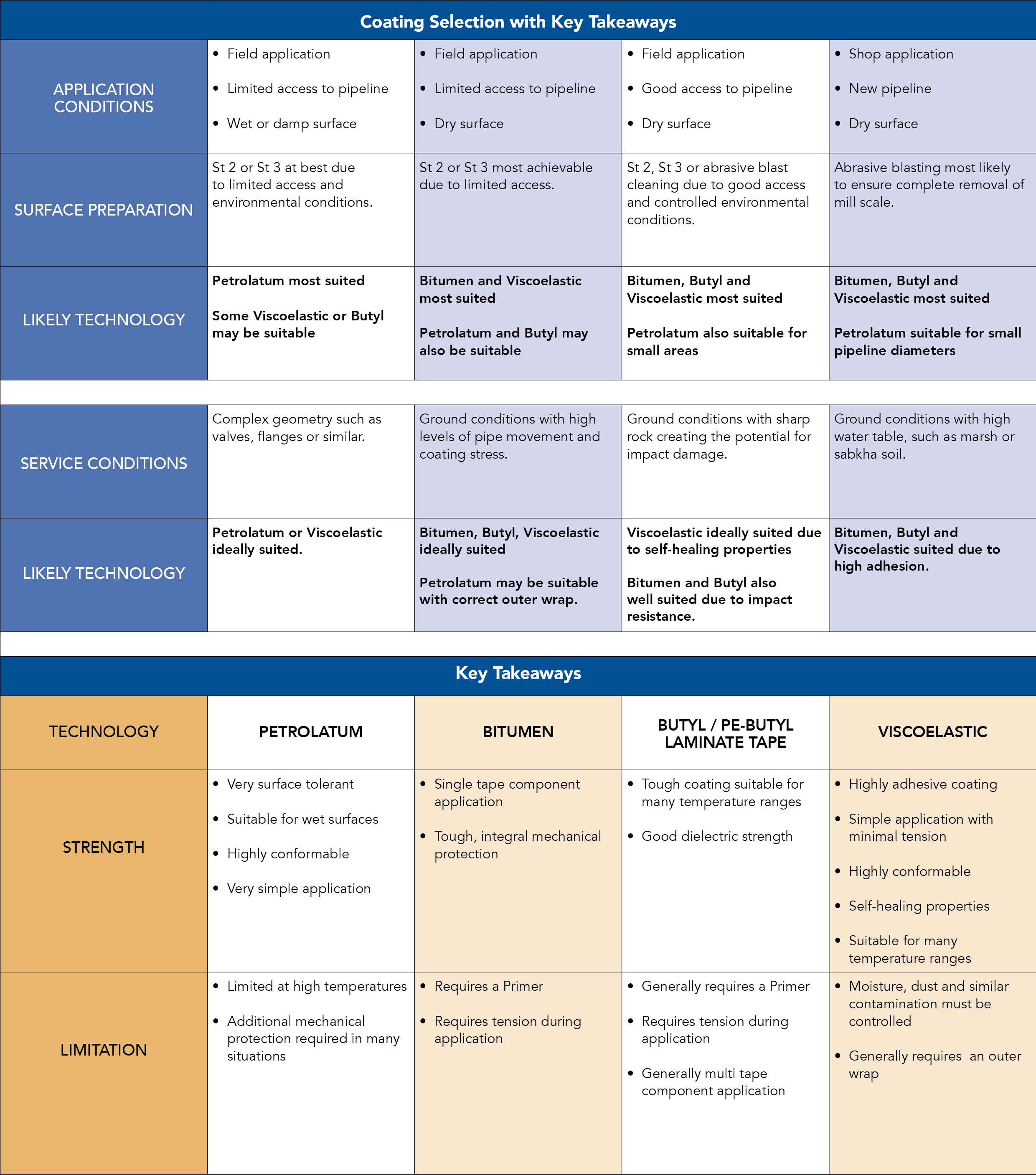
Table 1 and Table 2 Coating selection with key takeaways

Fig 1. The Denso™ Petrolatum Tape System in harsh wet, marshy conditions.

Fig 2. Premcote 1500™ used on ductile iron pipe in the desert.

Fig 3. Viscotaq Offshore Field joint Coating System used on offshore gas pipeline.